Agent Schedule Management
Product ideation and planning
I worked with the WEM Product Management team to plan and faciltiate a product innovation workshop which included end-users, ux design, ux research, and engineers. The team ended up generating seven product ideas that wanted to move forward with that focused on agent and management scheduling capabilities.

Impact
The participants created 7 new concepts and a 3-year roadmap. 5 concepts are now live!
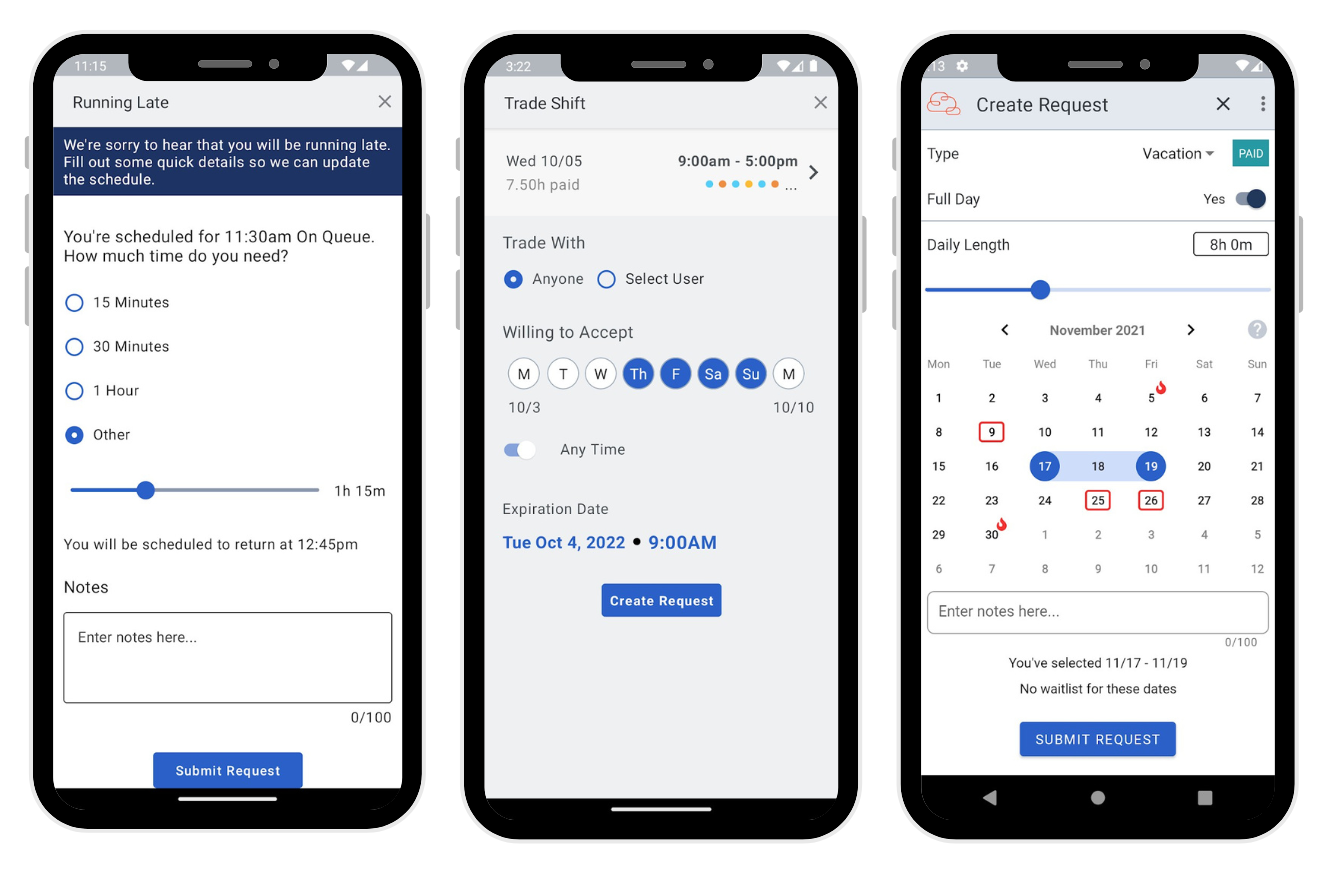
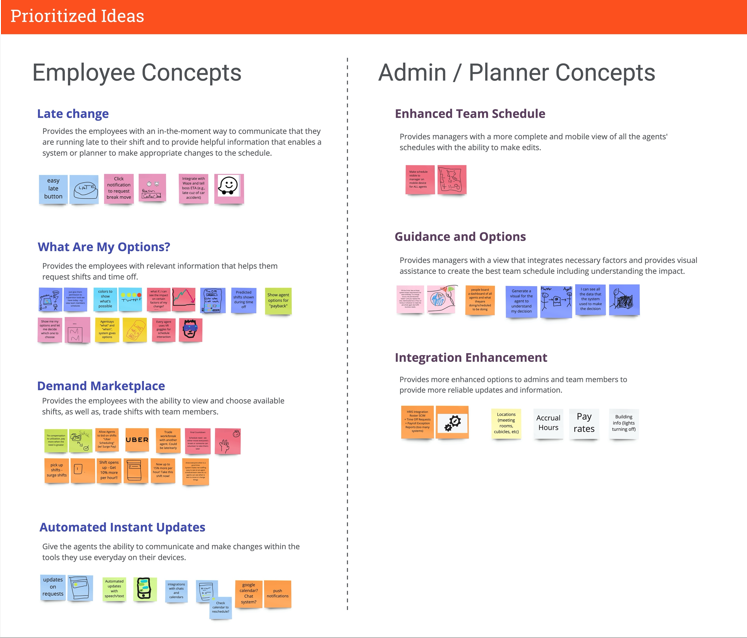
Late Requests | Employee concept 1 ‘Running late’
Trade shift | Employee concepts 2 ‘What are my options’ + 3 ‘Demand Market Place’
Workforce scheduling and forecasting | Admin concepts 1 ‘Enhanced Team Schedule’ + 2 ‘Guidance and Options’
“This was such an amazing collaborative experience. I am so excited to get working on these requirements. ”
The workshop
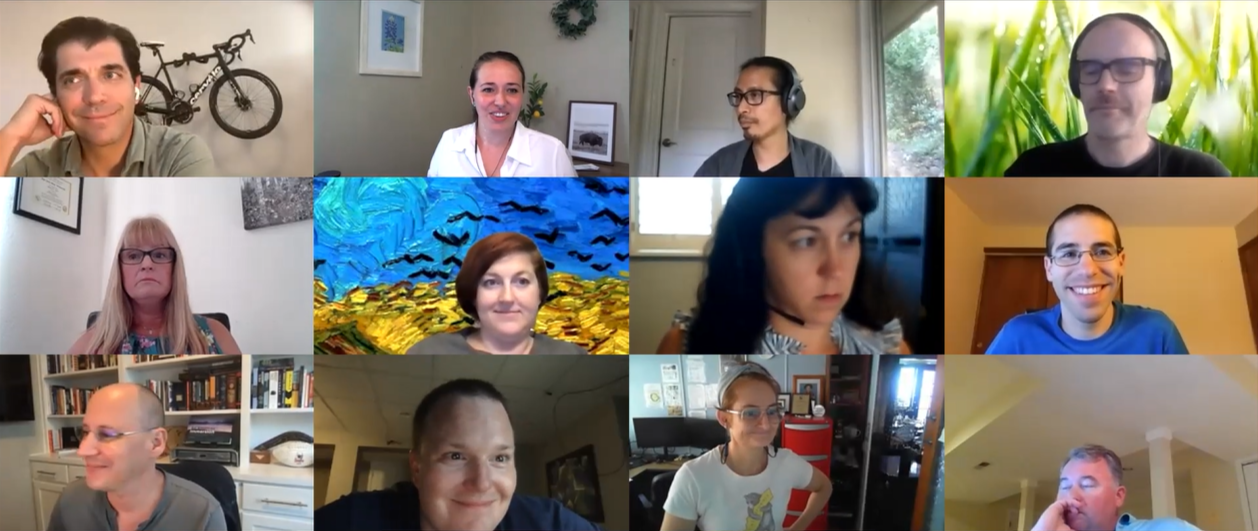
Participants 15
3 | Customers 3 | Engineers 2 | Product Managers 2 | Designers 2 | Researchers 3 | Business Consultants
Problem Statement
How might we provide a streamlined workforce management solution for customers that
increases agent satisfaction by giving them more control of their schedule
increases management satisfaction by controlling available capacity, adhering to business staffing rules, and increasing efficiency across the board
Workshop activities
Research & SME readout
Empathy Map
Journey Map
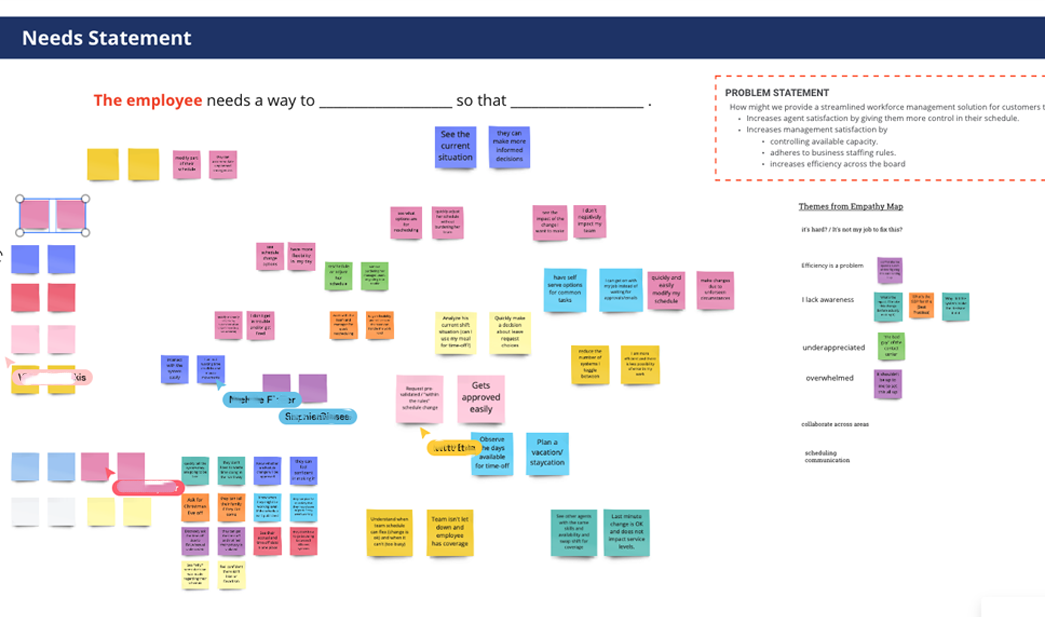
Needs Statements
Ideation + Prioritization
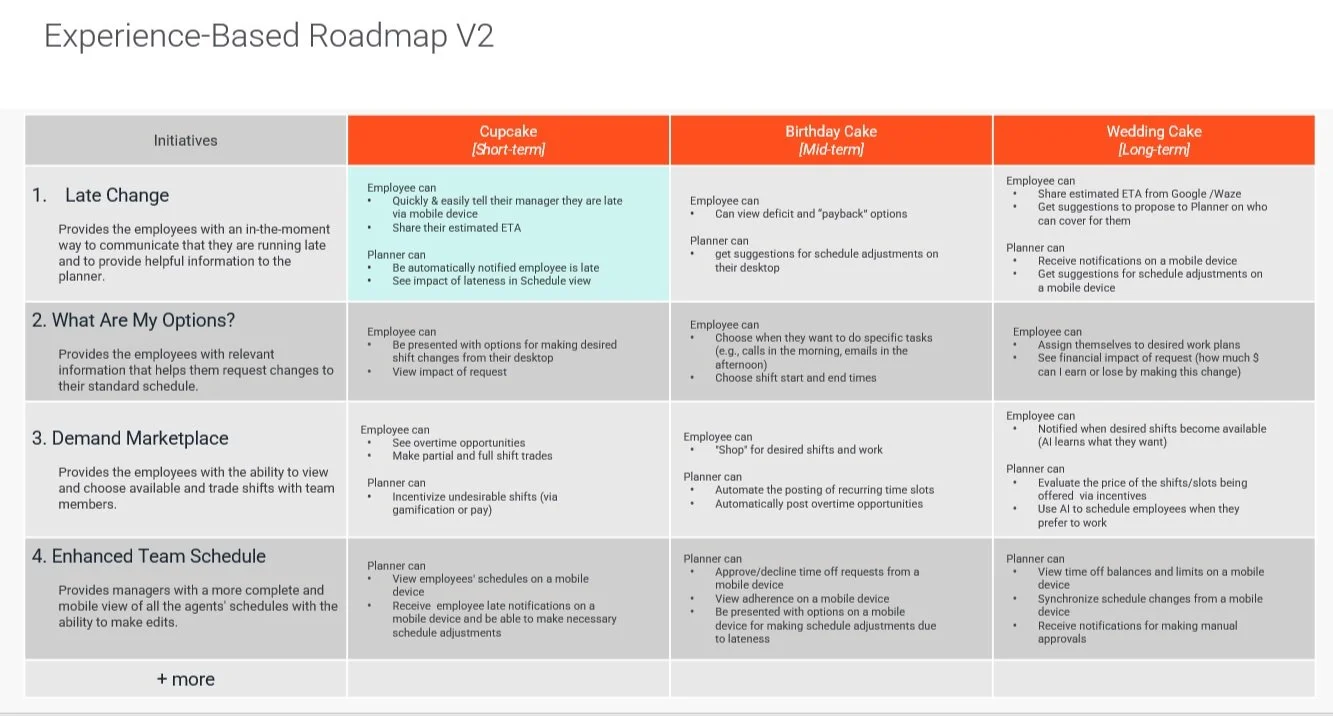
Experience-Based Roadmap
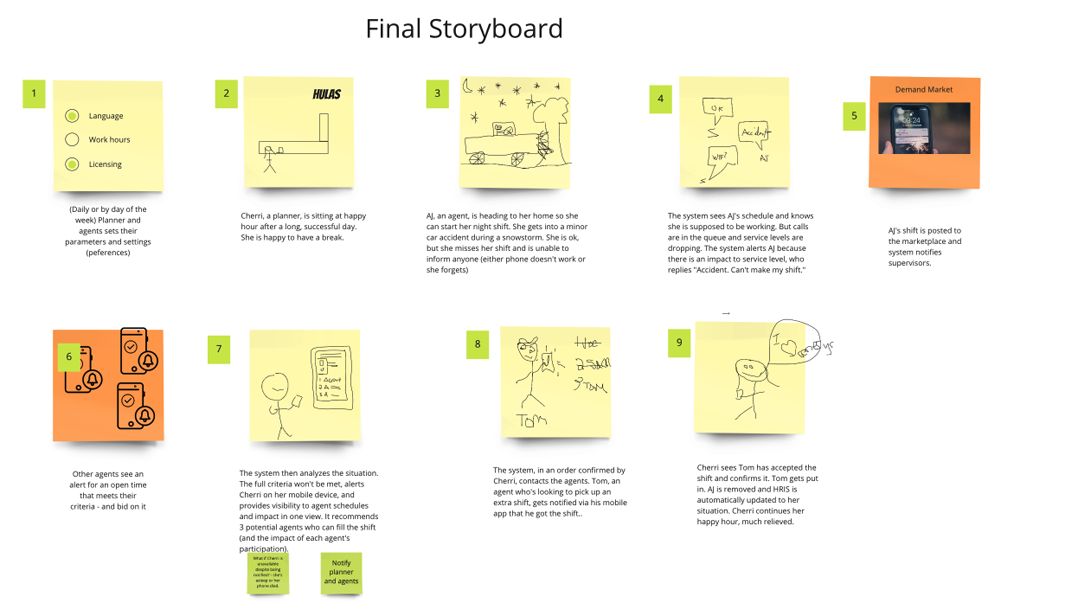
MVP Storyboards
Research insights
Employees needed to
understand schedule decisions
easily notify managers
access and modify their schedules on-the-go
access request statuses
discretely ask for time off
have one place for scheduling information
Managers needed to
know and share business constraints and consequences
know the impact of individual requests
follow a list of changes required
manage the impact of changes
Concepts
After drafting needs statements and an as-is journey map, the participants ideated solutions, iterated on them, and then prioritized based on customer value, feasibility, and business value. We then ideated on potential primary and additional capabilities for the concepts.
I tried to get them to narrow down to 2 -3 top ideas, but the team decided they wanted to move forward with 7. So we then prioritized those 7 to identify in what order the team should begin working on them.
Roadmap and Storyboards
Participants ideated further on potential capabilities and we broke them down by primary jobs-to-be-done and hypothetical phases of delivery. They then iterated to fill in gaps and storyboarded out the Concept 1’s MVP.