Team Management & Leadership
Crafting systems to support individuals and teams.
I am a systems thinker who likes to build and improve trackable structured processes and procedures to improve effectiveness, efficiency, and team health.
I’ve helped build a team of 9 researchers and 9 experience strategists. I’ve also helped lead a team of 15 strategic user researchers and lead projects that included cross-functional team members.
These efforts required program management, goal setting and monitoring, and clear predictable procedures.
Case studies
Career Rubric | Clear role expectations and goals
Innovation Program Planning | Setting teams up for success.
Program Management | Defining clear goals & tracking
“Winter was a critical partner in supporting all of our research programs. Her role supported all programs in execution, and she contributed her expertise from experience design to strategic research.”
Project tools | Jira, Aha!, Asana, Trello, Basecamp, Confluence, Sharespace, Microsoft Project, Planview
Career Rubric
Clear role expectations and goals.
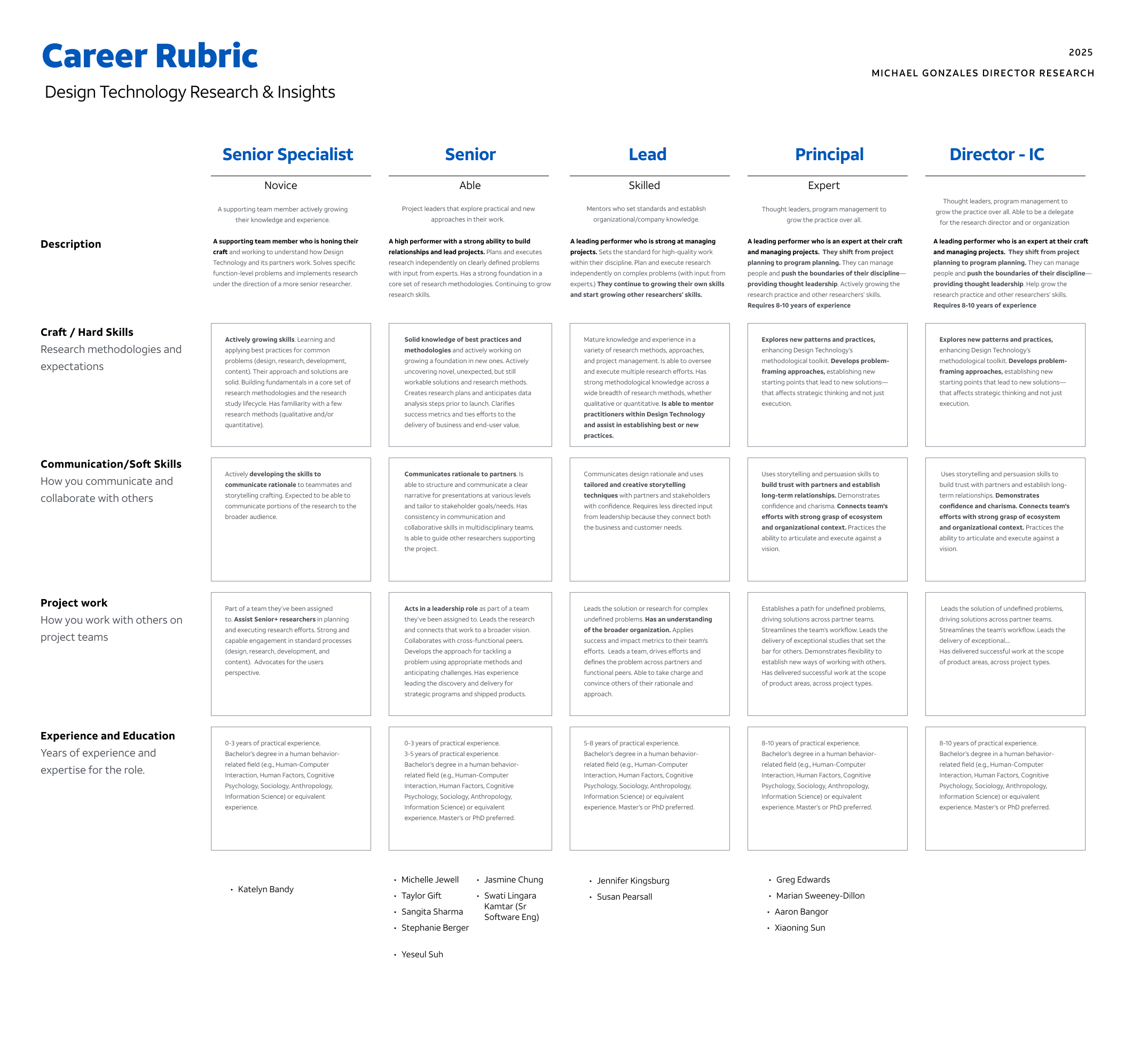
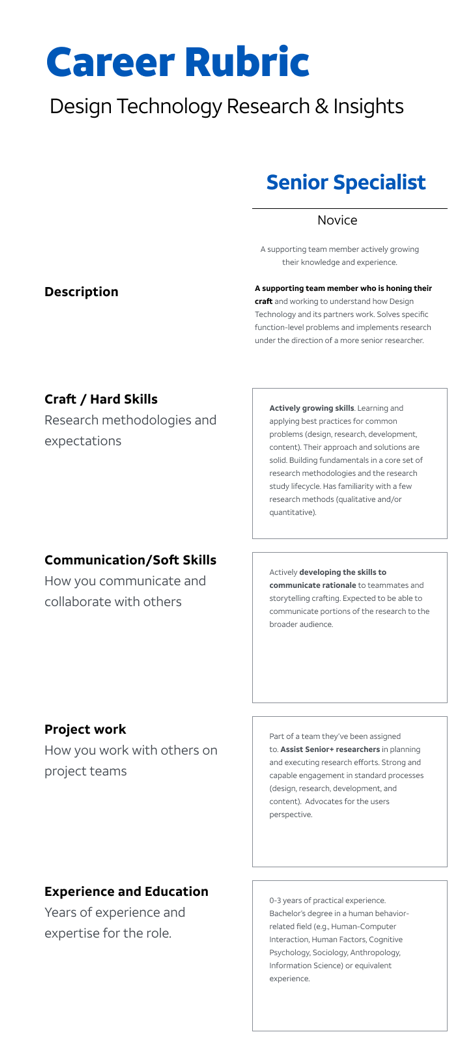
At AT&T, created standards for a team of 15 researchers to establish and communicate the skills, behaviors, and deliverables expected for each role. User Research roles were broken down by:
Craft / Hard Skills | research methodologies and expectations
Soft Skills | communication and collaboration
Project Work | working within and impact of project tams
Experience & Education | years of experience and expertise
It encouraged skill development, mentorship, and enhancing the value of their work. It was also used to expedite promotions and help others understand why we weren’t at a point for promotion just yet.
I also crafted career rubrics at Genesys for both the User Research and Design Strategy teams.
Innovation Program Planning
Ensuring teams are setup for success.
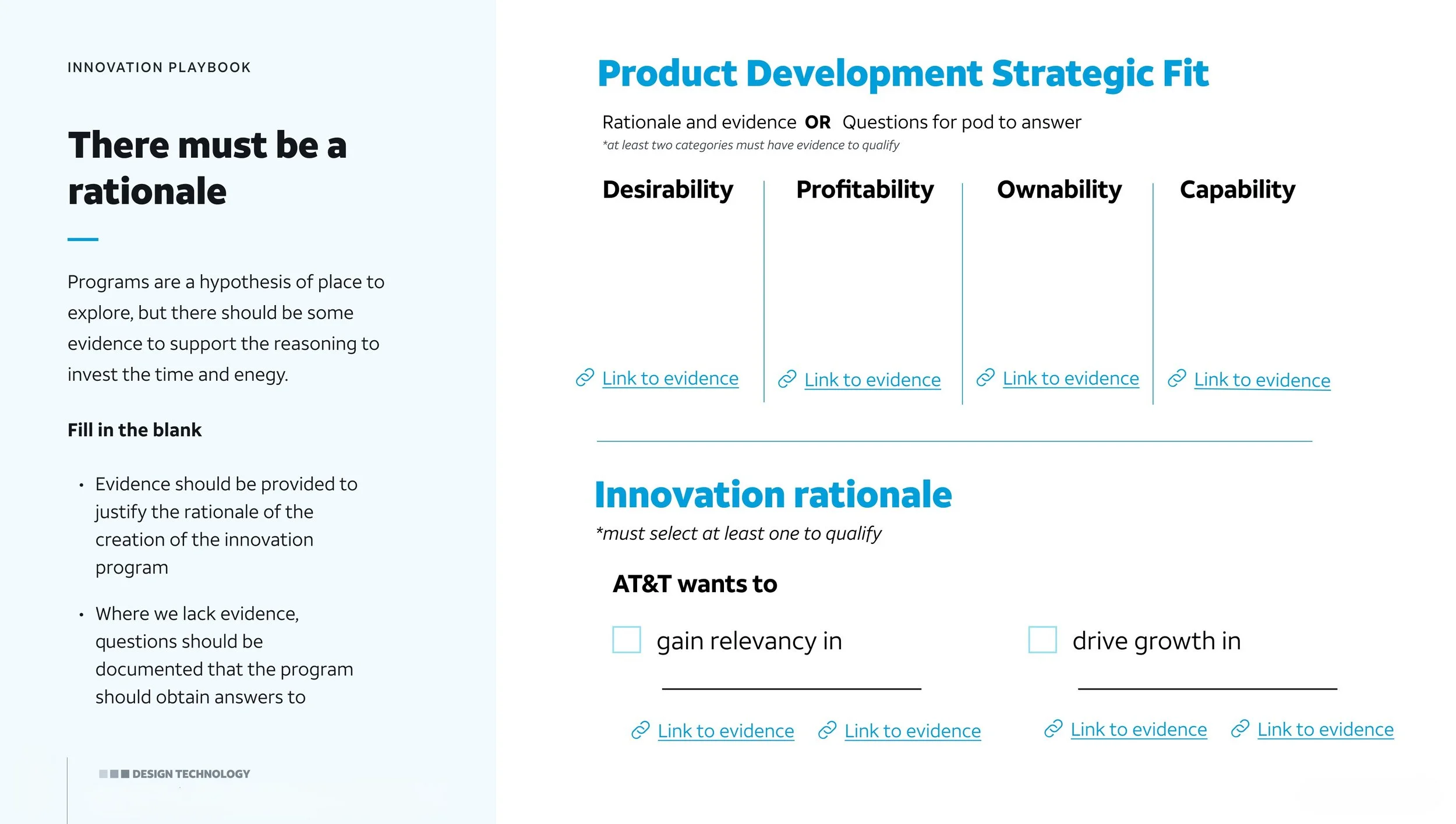
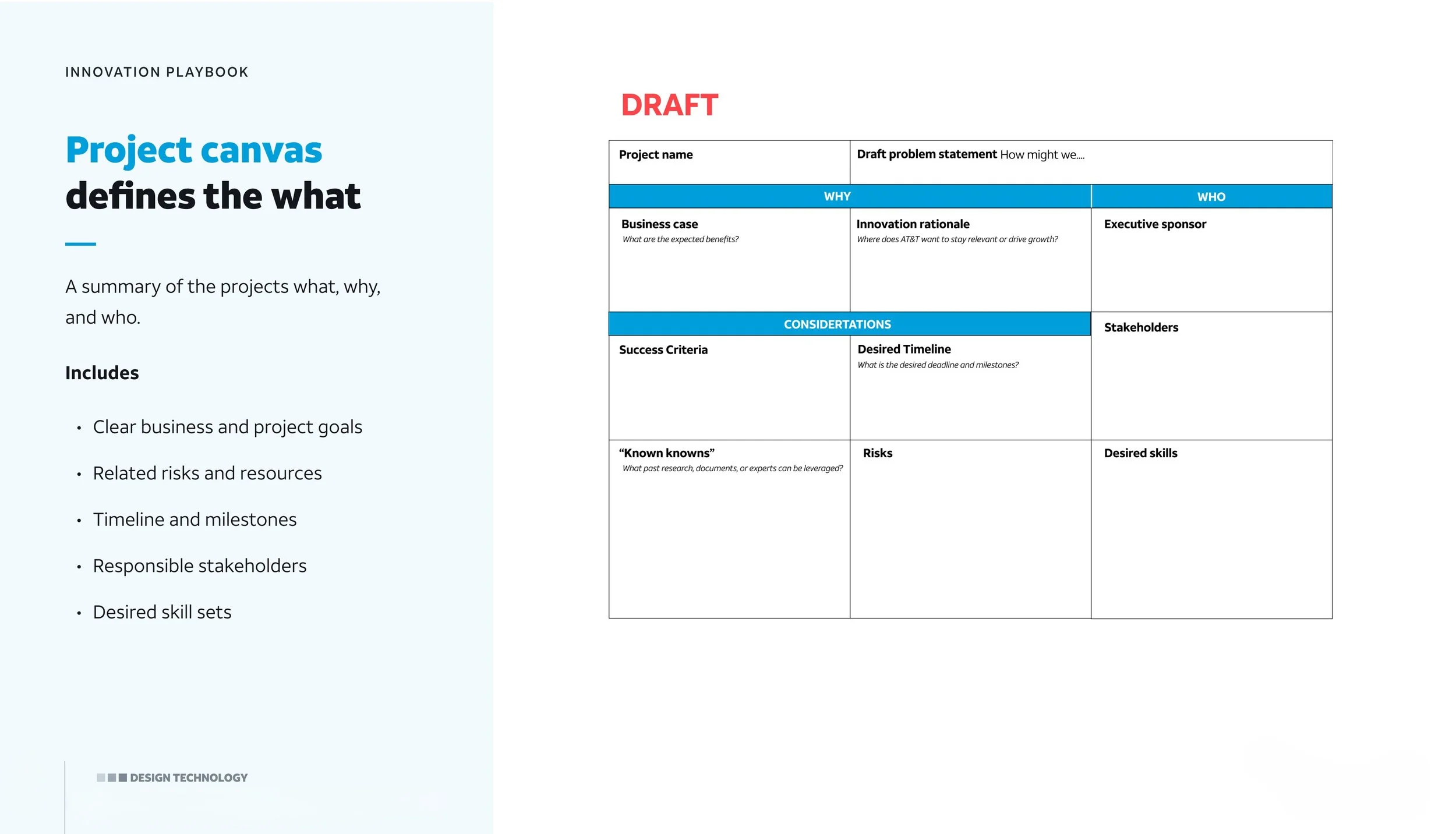
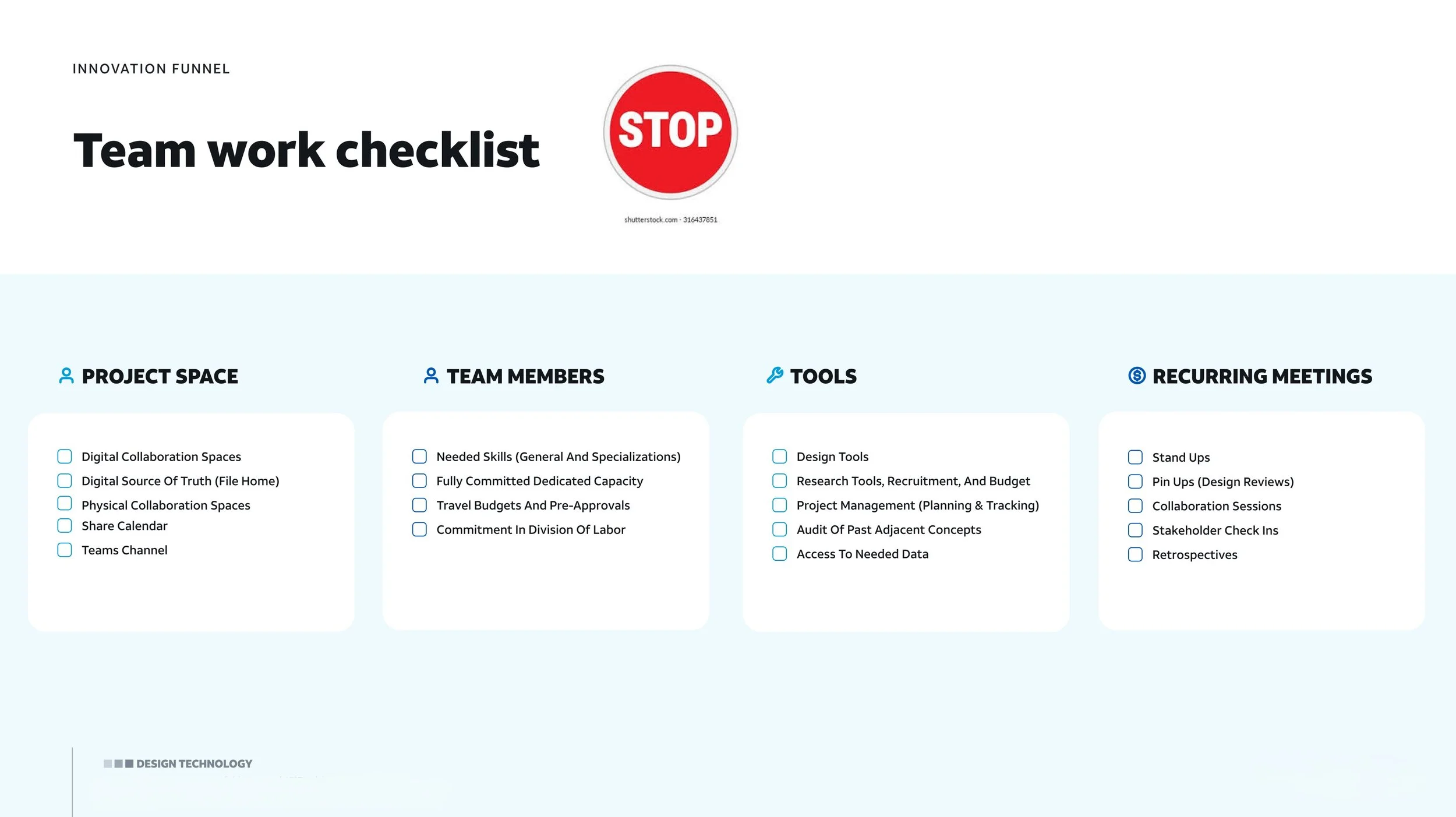
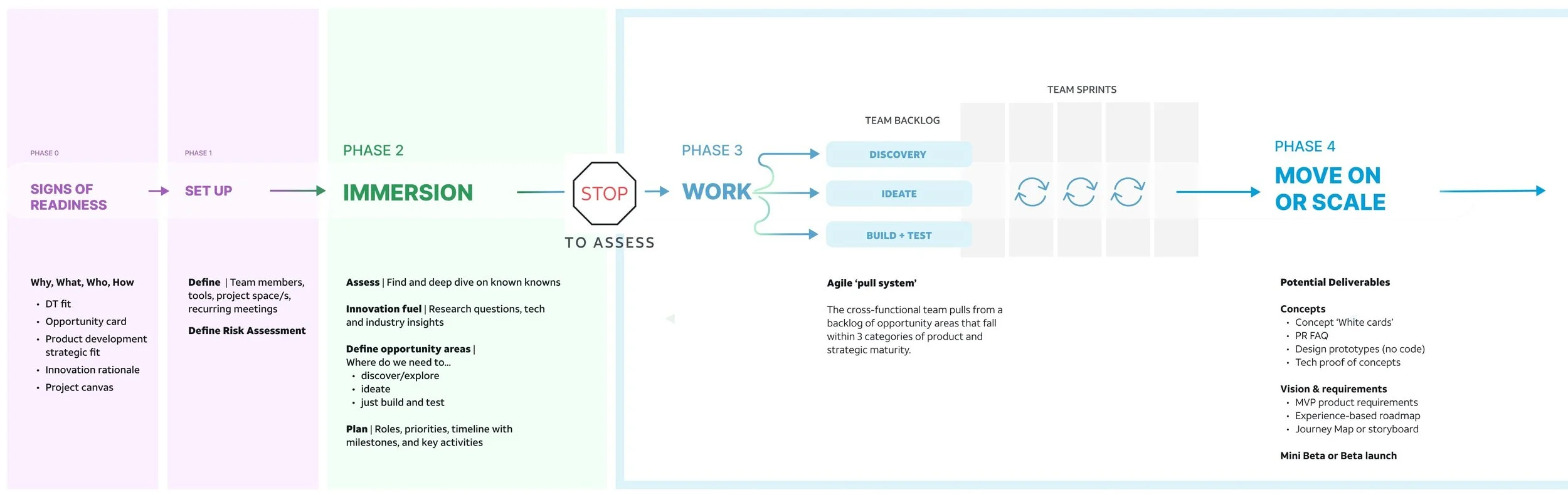
Our strategic design team were being placed on new fast-passed innovation workstreams with product and technical partners but the projects were getting stuck in “purgatory” which hurt our capacity and efficiency. I worked with a design leader to establish processes for program building and ‘definitions of ready’.
Ensuring our design team members were being setup for success and delivering to clear and trackable business goals increasing efficiency by 30%.
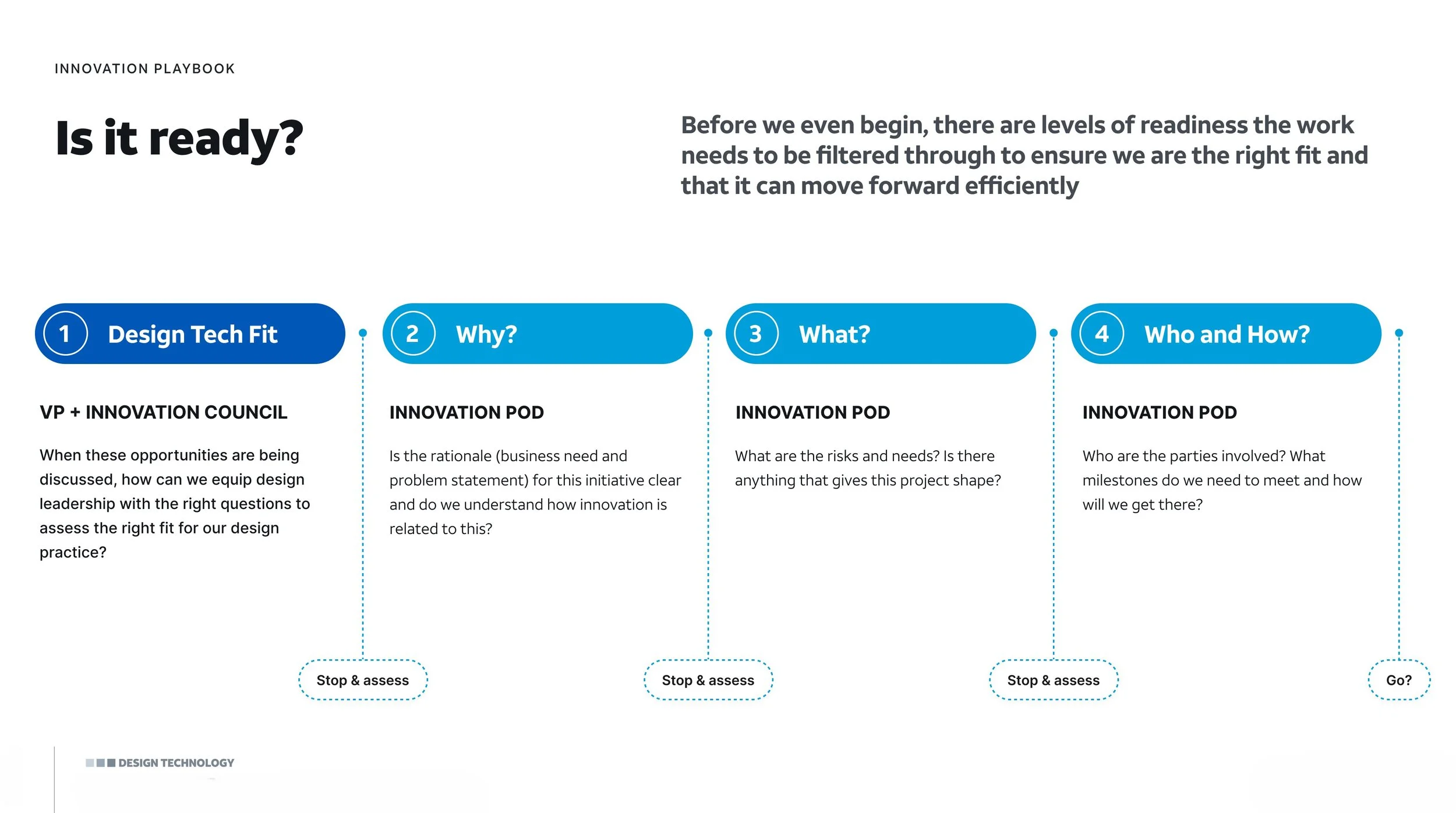
Why? The documented evidence and rationale that this effort aligns to business goals and is appropriate as an innovation effort.
What? Ensure a defined business case, expected deliverables, scope, stakeholders, and more.
Who? Establishing teams, collaborative tools, recurring behaviors, and information access.
How? Establishing how the team can work in an iterative and efficient manner with established guardrails and tracking.
Program Management
Defining clear goals and results
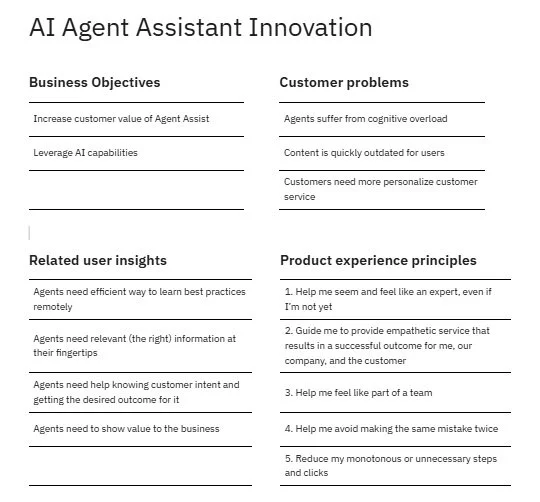
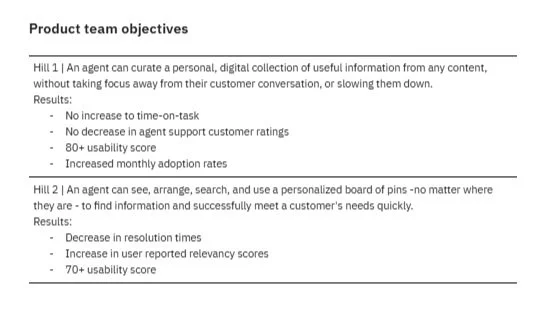
Project planning seemed only focused on scope, timeline, skill, and capacity, but I like to establish clear goals and ways to track impact with partners and team members that still adhere to customer-centered practices. Every project, I want to define and document
Business objectives
Customer problems and insights
Business and UX/CX metrics
Product vision
Tracking status, capacity, and team health.
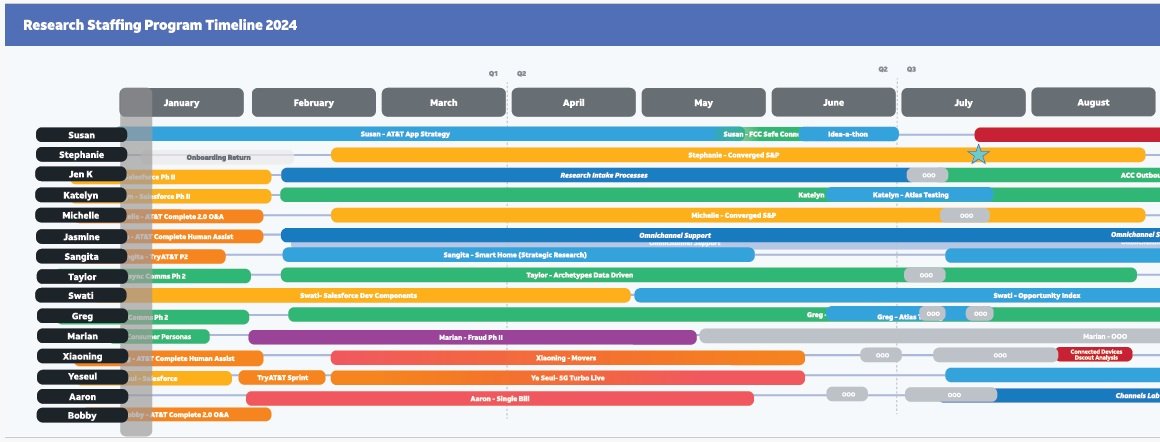
At Genesys I helped apply scrum practices to our Design Strategy team so that we could highlight capacity concerns and recognize needed assistance.
At AT&T, I owned project tracking for the 15 researchers via weekly status meetings and within our Microsoft Projects. I reviewed accomplishments and improvement opportunities every quarter. We avoided burn out and timeline disruptions, and